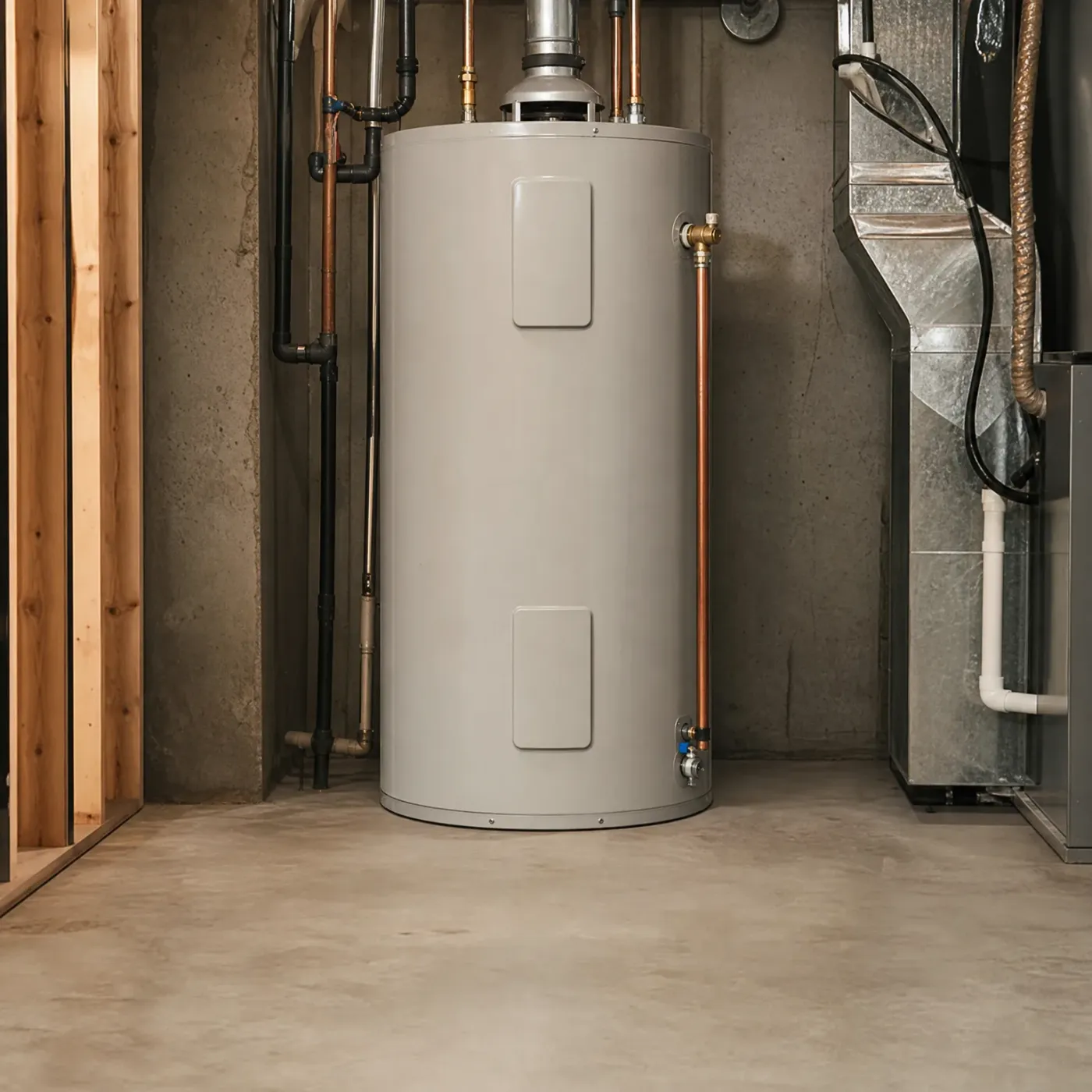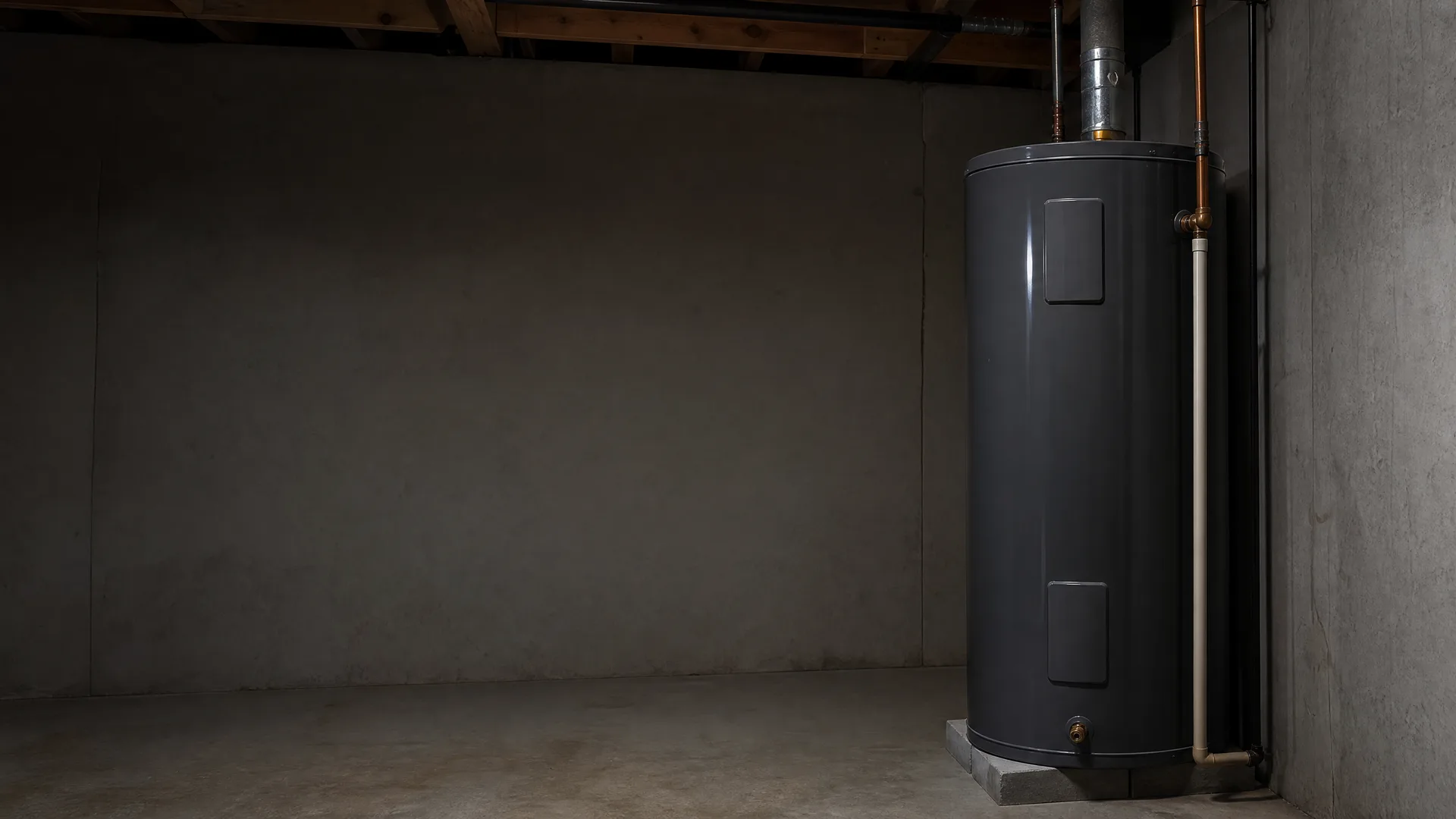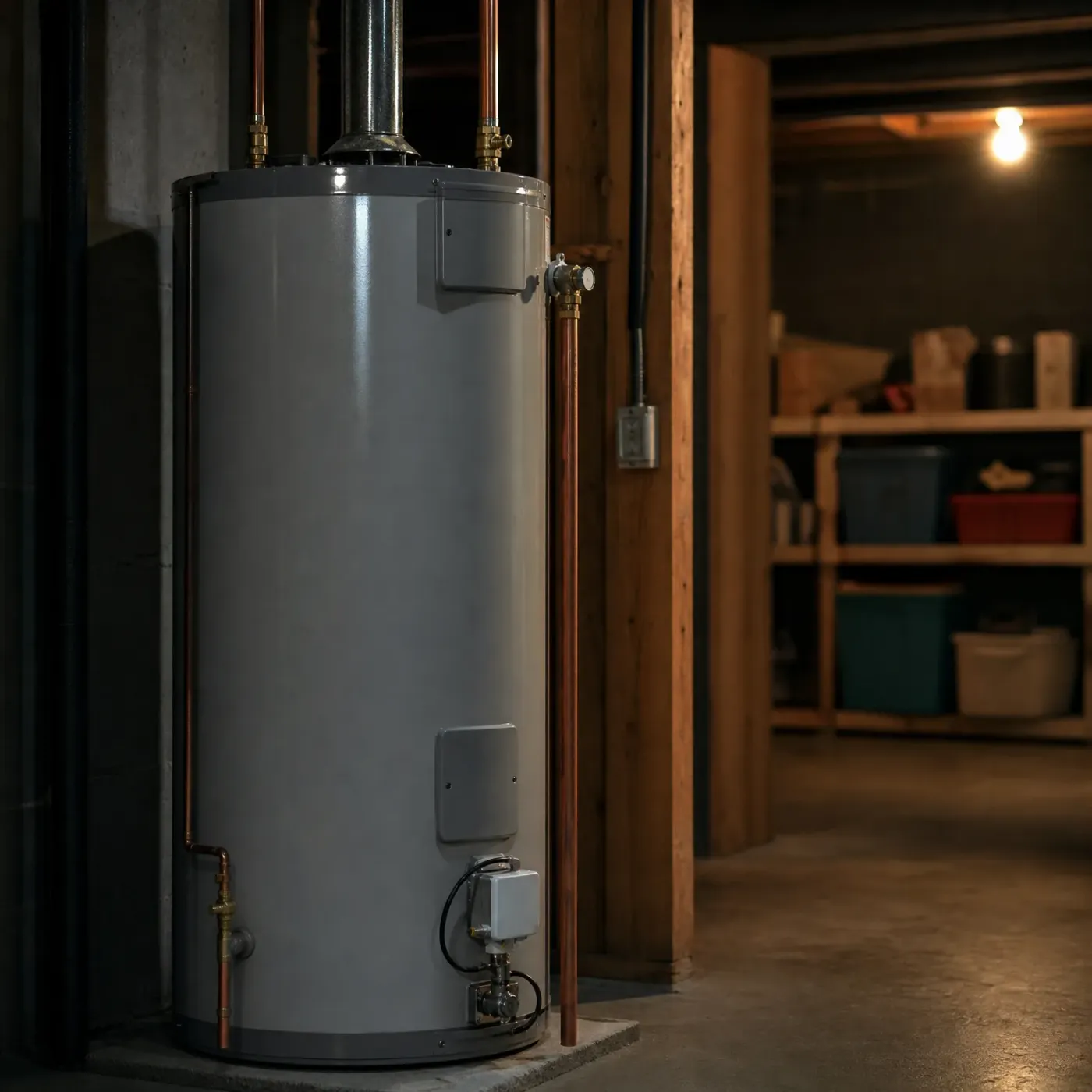
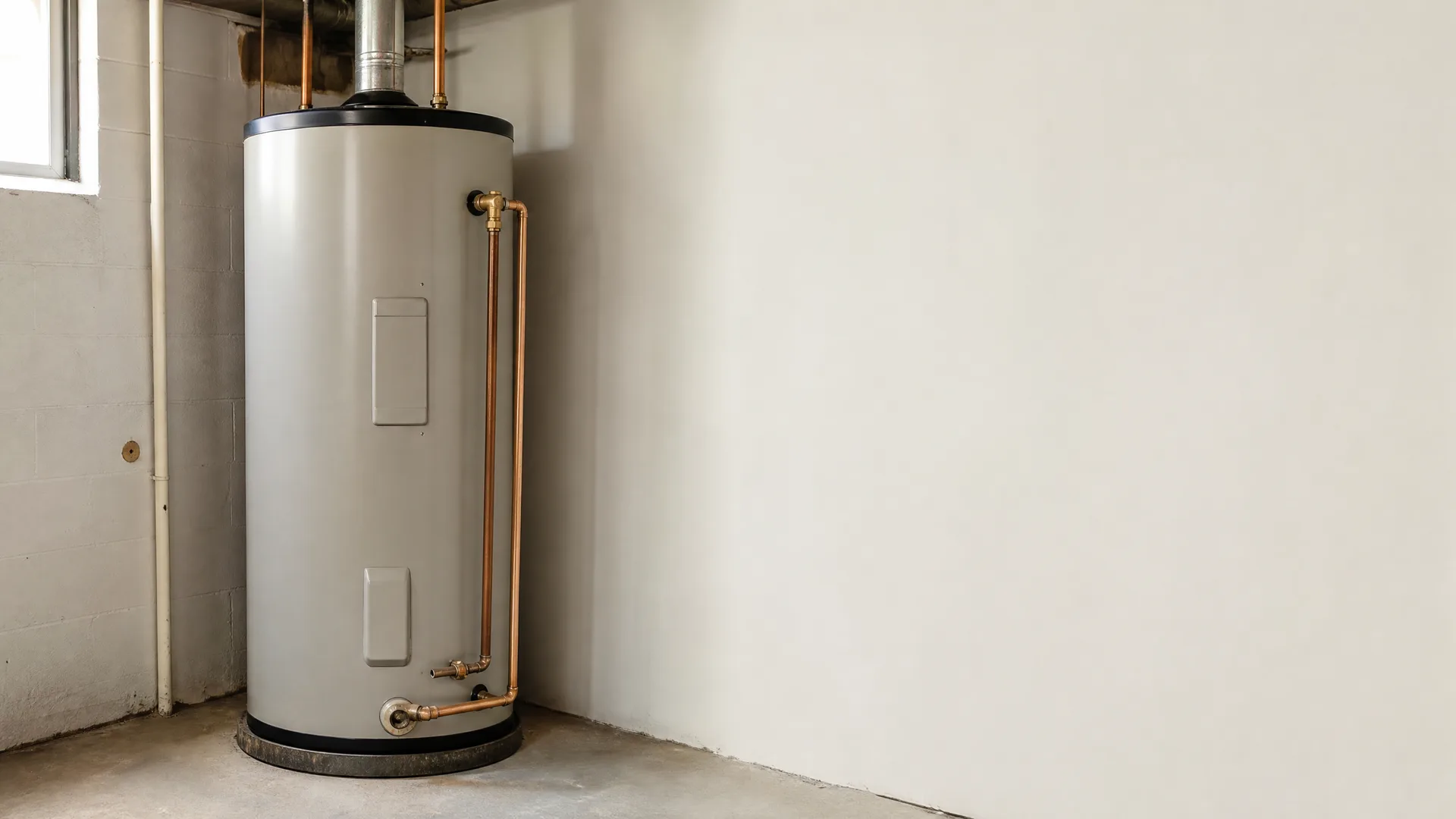





A large gray cylindrical water heater with copper pipes and a metal flue stands on a concrete pad in a dim basement, with wood framing and shelves of storage bins lit by a bare bulb behind it.

A pro who works on water heaters

Why your water heater is leaking in Nevada

A leak usually means a tank that's rusted through, a fitting that's worked loose, or a valve past its life. Hard water and hot Nevada summers both push a water heater toward the end faster. This page gets into what's likely failing and what to check before water damage spreads. Answer a few questions and a contractor who handles this will reach out, so you skip the search and the round of calls.

Match me with a pro

A leaking water heater almost always means one of three things: the tank itself has rusted through from the inside, a fitting or connection has worked loose, or the pressure relief valve is failing. If the water is coming from underneath the tank, that's usually the tank, and a rusted tank can't be repaired, only replaced. If it's coming from a pipe connection or the valve on top, that's often fixable. Gas water heaters, which most homes in Nevada have, add a few more spots to check, like the drain valve and the gas control assembly. Nevada's hard water speeds up the corrosion that eats through a tank from the inside, and hot summers mean the unit runs through more cycles keeping up with demand. Either way, a leak won't stop on its own and left alone it usually means water damage to whatever is nearby, so it's worth finding out quickly which of these three it actually is.

A tall gray cylindrical water heater with copper piping and a flue stands in the corner of an empty basement room with concrete block and painted walls.

Where the water is actually coming from

Water pooling at the base often traces back to the tank itself, not a fitting above it. Steel tanks hold an inner liner, and once it rusts through, the leak comes from the seam or the bottom, not from any pipe you can tighten. Check the inlet and outlet connections first since those are repairable. If the tank itself is wet all over or rusted at the seams, that's the tank failing, and no fitting swap fixes it.

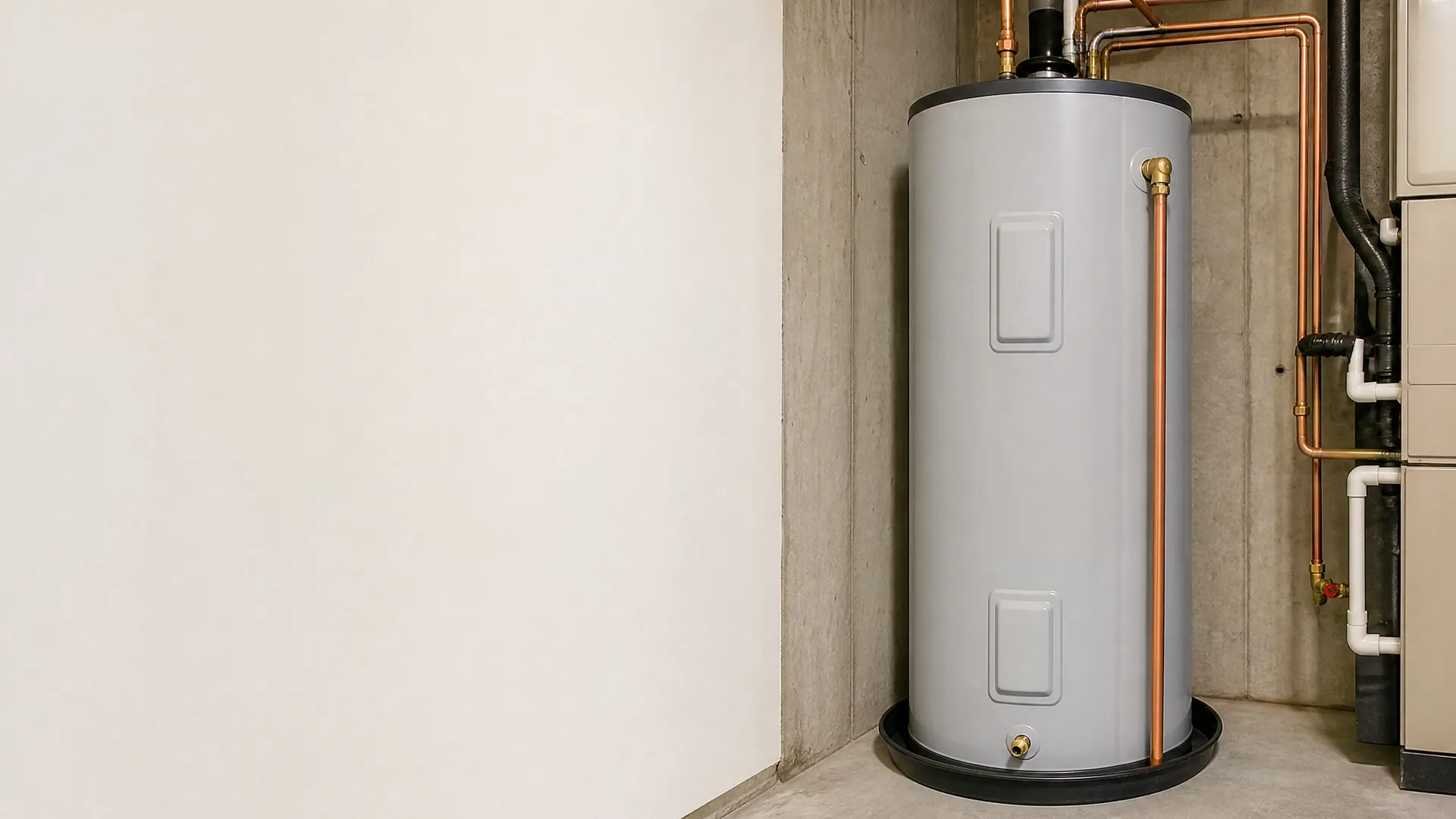
A gray cylindrical water heater stands in a drain pan against a concrete wall, with copper and white pipes running along the wall to the right and a plain light wall on the left.

What Nevada water does over time

Water here runs hard, and the minerals in it settle to the bottom of the tank as sediment. That layer sits between the burner and the water, so a gas water heater works harder to heat through it. Over months that extra heat stresses the tank's lining and the welds at the bottom. A tank that's never been flushed builds sediment faster, and a thick enough layer can trap water against the metal long enough to start the rust that ends in a leak.

Tank Failing or Just a Part

Tank leak

  • Water coming from under the tank itself usually means the steel liner has rusted through and the tank needs to be replaced, not repaired.
  • A rusted tank can hold slowly for weeks before it fails outright, so a small puddle now can turn into a flooded garage or closet later.
  • Nevada's hard water speeds up this kind of corrosion from the inside, so tanks here often don't last as long as the warranty suggests.
  • Once the steel has rusted through, there's no fitting to tighten or part to swap, the tank itself is the point of failure.
  • If the water heater is old enough that you don't know its install date, a tank leak is the more likely explanation.

Fitting or valve leak

  • Water dripping from a connection, pipe joint, or the pressure relief valve is often a part failure, not the tank giving out.
  • A loose fitting can usually be tightened or replaced, and the tank itself keeps working fine afterward.
  • A pressure relief valve that's leaking may be doing its job, releasing pressure that built up for a reason worth finding.
  • These leaks tend to show up higher on the unit, at a pipe connection or valve, rather than pooling at the base.
  • Catching a fitting leak early, before it damages the tank or the area around it, is usually a straightforward fix.
A smiling woman with dark shoulder-length hair in a cream V-neck sweater sits at a marble counter with a glass of red wine, with a kitchen and softly lit living room behind her.
A woman in a dark green sweater laughs while seated at a marble kitchen island with a glass of red wine, with open shelving, cabinets and a living room visible behind her.
A woman with long dark hair in a cream knit sweater laughs while looking off to the side, seated at a counter with a glass of red wine, in a dimly lit living room with a sofa, lamp, framed pictures and houseplant behind her.
A smiling woman with long dark hair in a beige sweater sits at a marble kitchen counter with a glass of red wine, with a dimly lit living room behind her.

Get your water heater to the right pro

A water heater in Nevada works against hard water for years before anyone sees a drop on the floor. By the time it shows, the tank's liner is usually already gone or a valve is already past holding. Figuring out which one it is, and whether it still makes sense to repair it, means getting a contractor to look at the tank itself, not just trading guesses over the phone. Most homeowners end up calling two or three plumbers, describing the same puddle each time, then sitting on quotes that don't line up because nobody looked at the same tank. That's the part worth skipping. Hand off the details once and a contractor who handles this kind of repair in your area follows up with you directly. You still decide what happens with your water heater. You just stop being the one who has to track down who's available and explain the leak from scratch every time.

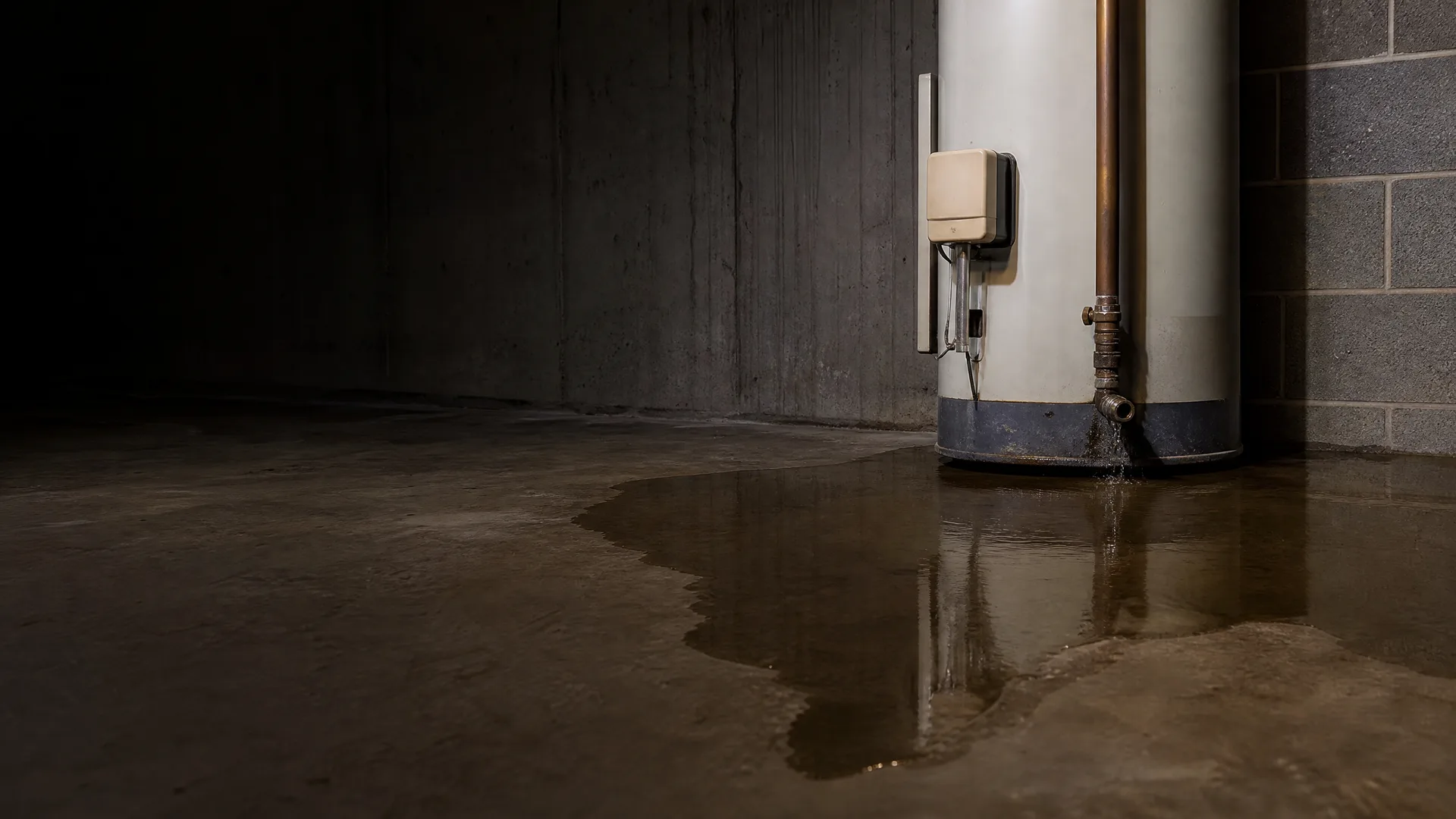
A water heater tank with copper piping and a drain valve stands against a concrete and block wall in a dim basement, with a large puddle of water spreading across the floor.

It's Saturday morning and you're down in the basement looking for the box of winter clothes. The concrete floor is cool under your socks, the kind of cool that feels good after another hot Nevada summer. Then you see it. A thin ring of water has spread out from the base of the tank, maybe a foot across, dark against the gray floor. You crouch down and touch it. Cold. You look at the top of the tank, the pipes going into the wall, nothing dripping there. The water is just coming up from underneath, like the tank itself is sweating from the bottom.

What's that water doing on your utility room floor

You might have noticed it when you went to grab something off the shelf near the tank: a damp patch on the floor, a faint metal smell, or a rust-colored ring around the base. Sometimes it's just a few drops a day that evaporate fast in the dry air and you only catch it because the floor stays slightly discolored. Other times there's active dripping from underneath, or water beaded along a fitting at the top. If the tank sits on carpet or near drywall, that moisture doesn't have anywhere to go, and it will soften the base of the wall or warp the flooring the longer it sits. A gas water heater that's leaking near its base is also sitting close to the burner compartment, so standing water there is worth taking seriously, not just mopping up.

A gray cylindrical water heater standing on a concrete floor in a basement corner, with copper pipes and a metal duct running overhead along bare concrete walls.

Tank holding steady

This is what a water heater looks like when it's still doing its job. The fittings are dry, the drain valve is closed up tight, and there's no rust creeping down the side of the tank. Copper and galvanized pipe connections stay sound as long as nothing's worked loose underneath them.

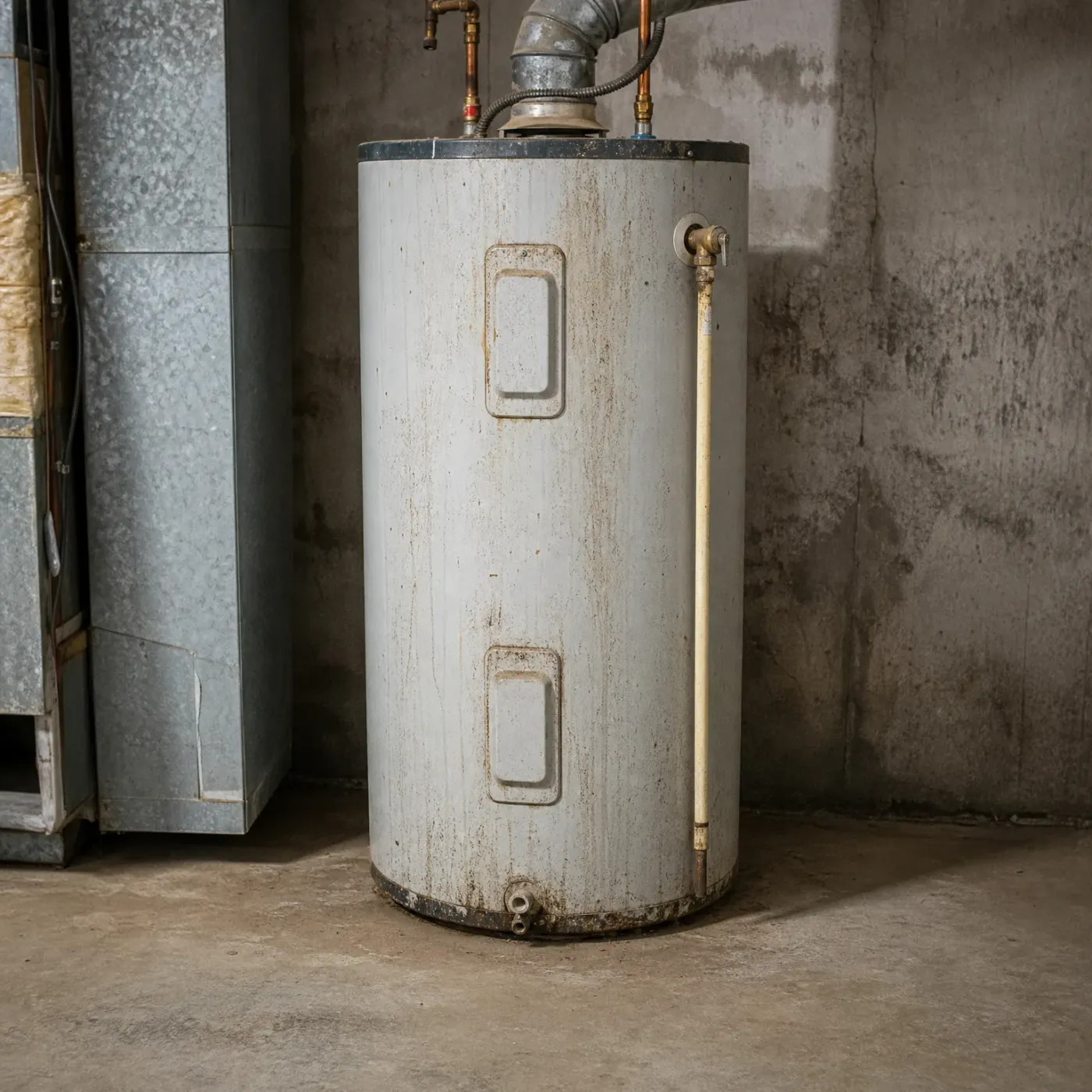
A white cylindrical water heater with rust stains and two access panels stands in a basement corner between a painted concrete block wall and a bare concrete wall, with metal pipes running up and alongside it on a concrete floor.

Tank past its life

Rust like this on the tank itself isn't a surface problem. Once corrosion reaches this stage, it's usually worked through the steel somewhere you can't see yet, not just at the fittings on top. A tank showing this much wear is closer to failing than holding on.

An old rust-streaked cylindrical water heater with two access panels, copper pipes and a flue at the top, and a discharge pipe along its side, standing on a concrete floor beside galvanized ductwork against a bare concrete wall.
Before you get your water heater repair
A gray cylindrical water heater with copper piping and access panels stands against a concrete basement wall beside ductwork and vertical pipes.
After you get your water heater repair

Letting it ride means checking the base of the tank every so often, keeping a bucket under it if the drip is slow, and hoping it holds until you've got time to deal with it. Some tanks last weeks that way. Some don't.

Getting it looked at means a licensed plumber tells you straight whether it's a fitting worth tightening or a tank worth replacing, before a slow drip turns into a flooded utility room on a day you didn't choose.

A smiling bearded man in a navy sweater sits at a candlelit dinner table with a glass of red wine, a bowl of salad, and plates of food in the foreground.
A woman with dark hair in a bun reclines on a sofa with her eyes closed, wrapped in a cream fleece blanket, a closed blue hardcover book resting in front of her, with a lit lamp and a vase of dried flowers in the background.

58.9% of homes statewide heat with gas

Most houses in Nevada heat their water with gas, not electricity. A gas water heater keeps a pilot or igniter lit near the base of the tank, so a leak there can mean a wet floor and a burner that won't stay running until the tank is dry.

ACS 2020-2024 5-year B25040

A man seen from behind raises his hand to wave at a woman standing in the open front doorway of a single-story house with gray shingle siding, white columns and a gabled porch entry.

So where does that leave you

A leak means the tank has rusted through, a fitting has worked loose, or the relief valve is done. Water under the tank itself points to the tank. Water higher up, around a pipe or a valve, points to something that can often be fixed instead of replaced. Either way, the water on the floor isn't going to stop on its own, and a gas water heater that's sitting in water won't stay running long.

You don't have to figure out which one it is by yourself, and you don't have to spend your evening calling around Nevada to find someone who answers the phone and knows gas water heaters. Tell us what you're seeing and where it's coming from, and you'll be matched with a contractor who takes it from there, including reaching out to you to sort out the rest.

A gray upholstered sofa with a textured cushion sits beside a dark round side table holding a vase of green foliage, with a table lamp and sheer-curtained window behind.
A dark gray cylindrical water heater with copper and metal pipes stands on a concrete pad in the corner of a dim basement with bare concrete walls and exposed floor joists overhead.

The right pro for this job

Explain the job once and skip repeating it on every call.

Step 1 of 3: Equipment