Profile view of a bearded man wearing a black baseball cap and a dark gray T-shirt against a plain light background.

Why you run out of hot water fast in Nevada

Step 1 of 3: Equipment

Running out of hot water fast usually means the tank can't keep up with demand, and the fix depends on why. If your water heater is gas, the most common cause is a burner that's not getting enough gas or a thermocouple that's shutting it off early, so it heats slower than it used to. Sediment settled at the bottom of the tank is another common cause. It builds up over years and acts like insulation between the burner and the water, so the heater runs longer and still falls short. A tank that once gave you a full shower and now runs cold halfway through has lost capacity somewhere, either from sediment eating into the usable volume or from a heating element or burner that isn't working at full strength. None of this means you need a new water heater. Most of these are repairs, and catching it now keeps a small problem from turning into a tank that fails outright.

A smiling man in a gray long-sleeved shirt stands in a kitchen looking to the side, with open shelves of dishes, a white mug on the counter, a potted plant, and a view through a doorway into a living room.
A smiling bearded man in a green sweater sits at a white marble kitchen island with a mug, potted plant and bowl of fruit, in a bright white interior with open shelving and an arched doorway.
A smiling man with dark curly hair and a beard, wearing a dark green knit sweater, stands at a white marble kitchen counter with a dark blue mug, with open shelving, pendant lights and a houseplant behind him.
A smiling man in a green ribbed sweater stands behind a wooden table holding a ceramic mug of coffee in a kitchen with white subway tile, shelves of potted plants, and a bowl of fruit.
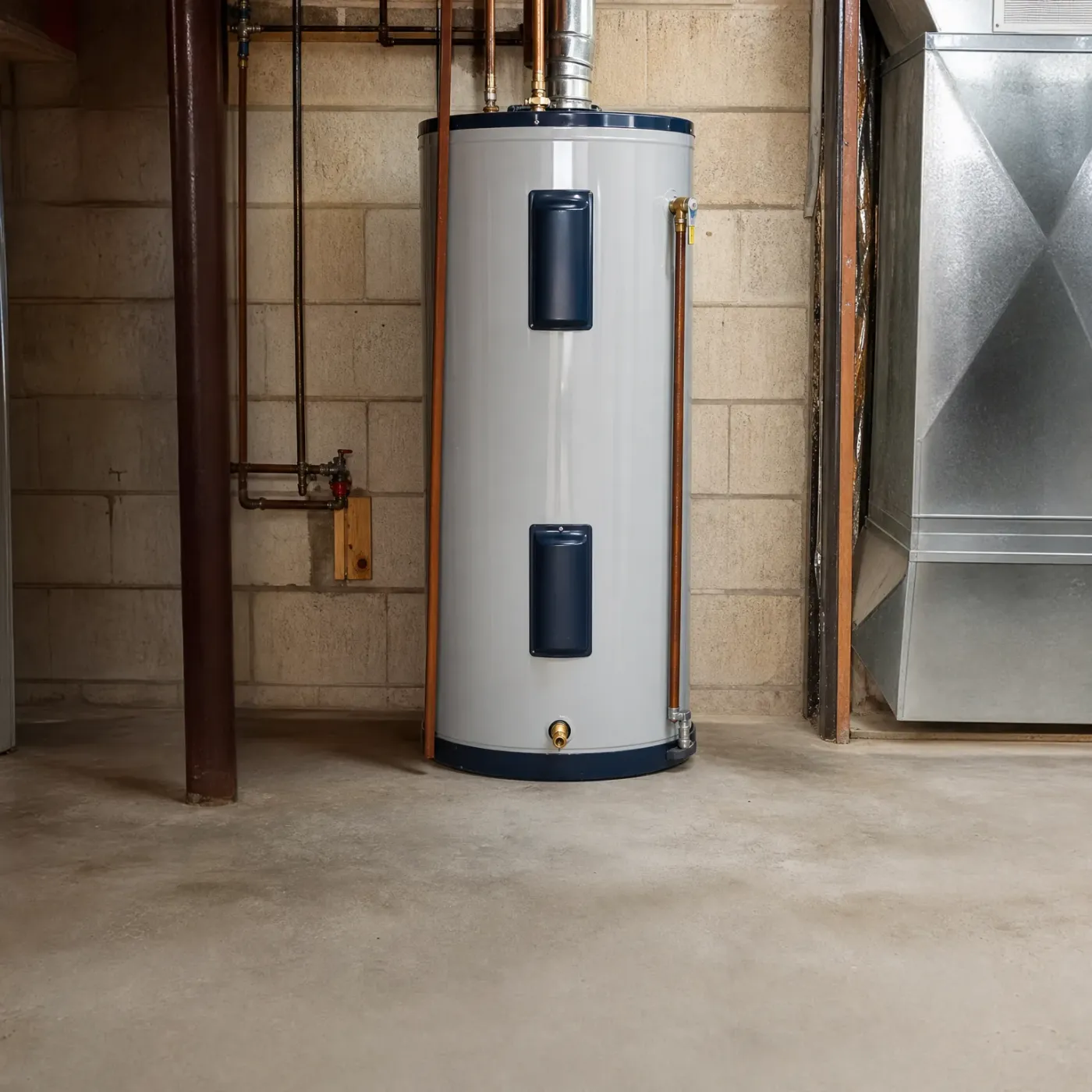
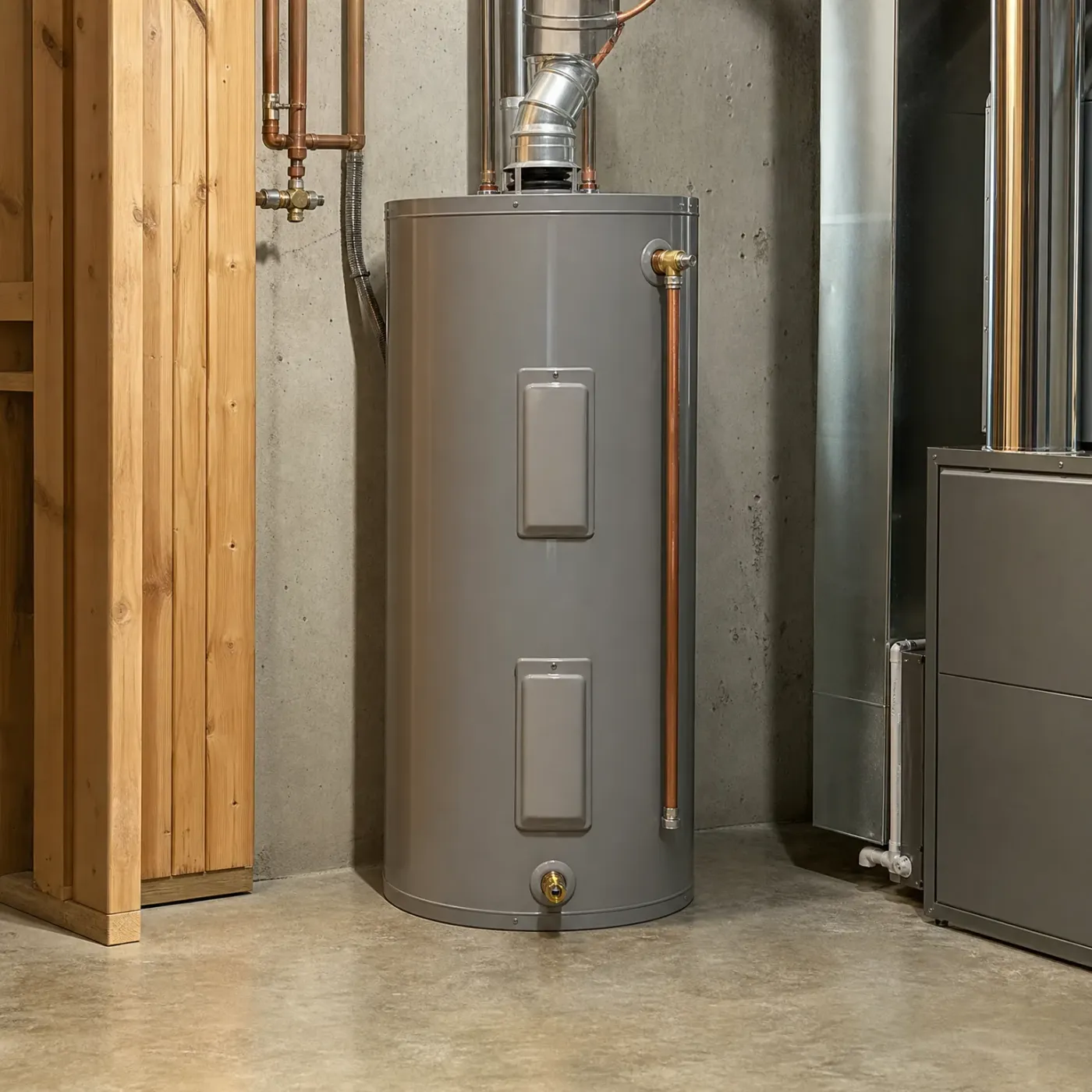
A gray cylindrical water heater with two access panels and copper piping stands against a concrete wall in a basement, beside wood framing and metal ductwork.

Working the way it should

A tank that's heating properly cycles on, brings the water up to temperature, and holds it there. The burner lights fully, the pipes run warm to the touch, and the flue draws normally. You get a full shower without the water turning cold halfway through.
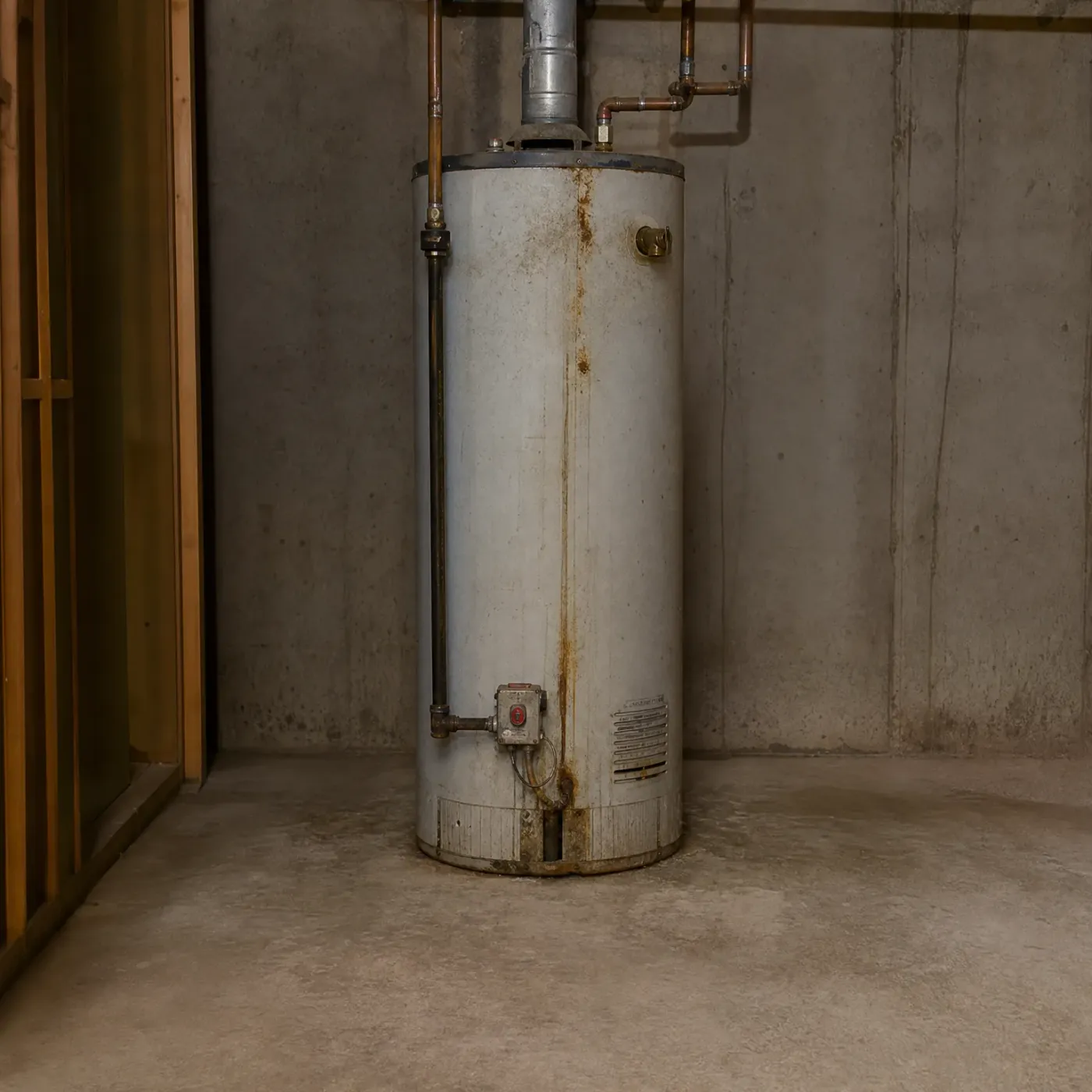
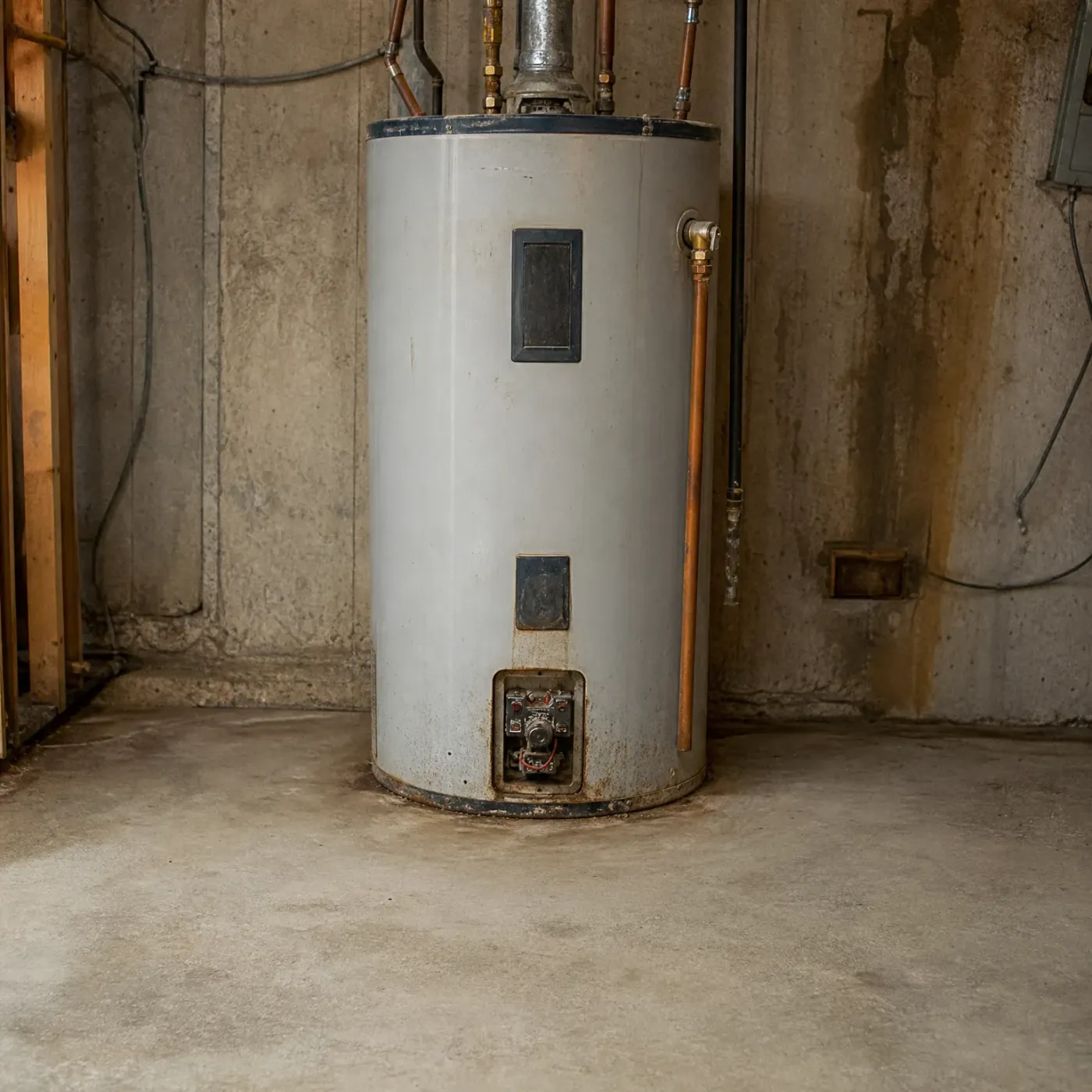
An aging rust-streaked gas water heater with copper and galvanized pipes stands against a bare concrete basement wall beside wooden stud framing.

Rust is telling you something

Rust on the tank, the fittings, or the gas valve means the steel is failing from the inside too. A burner that struggles to stay lit, or a tank that heats less water each week, often looks exactly like this before it quits for good.

Why does the hot water only last a few minutes now

You run the shower and it's warm for a few minutes, then it fades to lukewarm before you're done. Maybe you've started running the dishwasher after everyone showers instead of during, just to get hot water out of it. You might notice the burner taking longer to catch, or a faint gas smell near the tank when it kicks on. If the thermocouple is shutting the burner off early, the tank is only ever getting partway to temperature before it stops heating, which is why it feels like you have less hot water than you used to even though nothing in the house changed. Left alone, a burner that won't stay lit can get worse until the tank stops producing hot water at all.

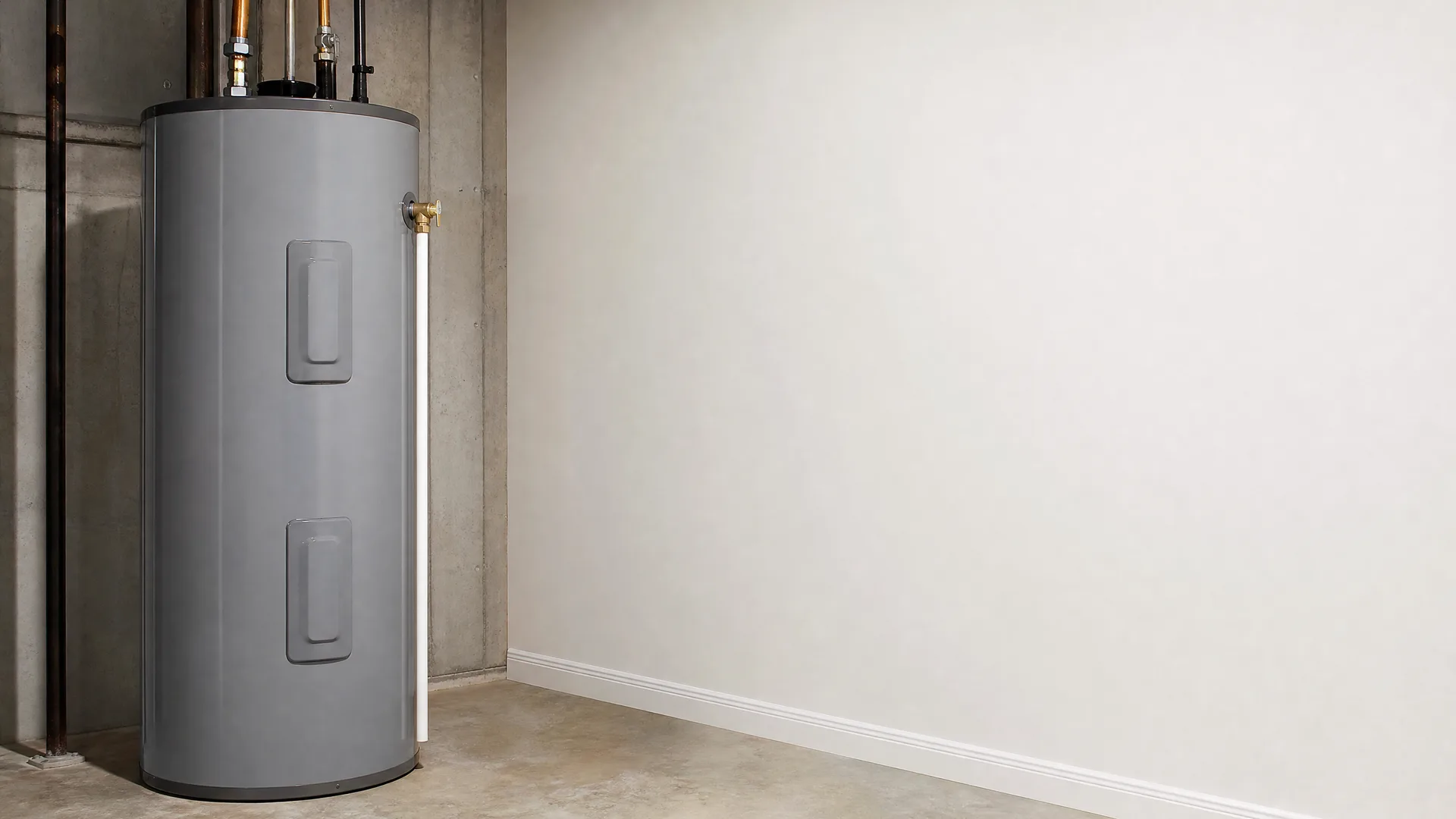
A gray cylindrical electric water heater with two access panels stands in a corner of a room with a concrete floor, connected to overhead pipes and a white drain pipe, beside a plain light-colored wall.

The thermocouple's actual job

The thermocouple sits in the pilot flame and tells the gas valve the pilot is lit. If it reads weak or the flame drifts off it, the valve cuts gas to the burner early, sometimes before the full tank gets hot. You get some warm water, not a full tank's worth. A thermocouple that's dirty or bent out of the flame will do this even when everything else on the heater is fine.

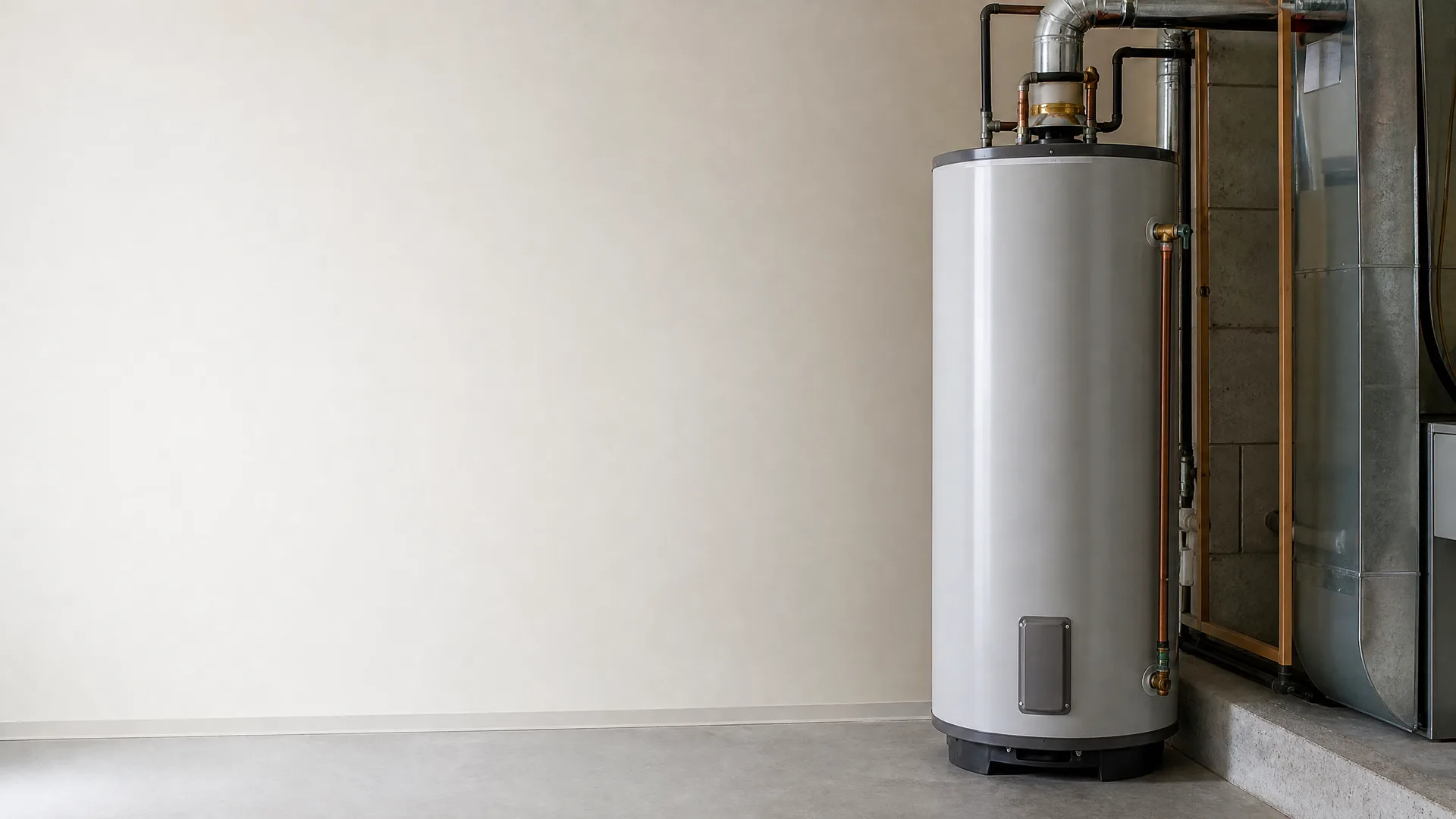
A tall cylindrical water heater with copper and metal pipes at its top stands against a plain beige interior wall on a concrete floor, beside ductwork and a raised concrete step.

What a struggling burner looks like

A gas burner that's not drawing enough air or gas burns yellow instead of blue, or it lights unevenly across the ring. Heat transfer to the tank slows down, so the heater runs longer to reach the same temperature, if it gets there at all. Soot near the burner opening or a flame that looks lazy are both signs worth checking before the tank is written off as failing.

A closed silver laptop and a ceramic mug of dark coffee sit on a wooden table in front of two chair backs, with a kitchen counter, tiled backsplash, wooden cutting boards, a vase of greenery and a potted plant by a window behind.

What a weak burner actually does to the tank

A gas burner that's starved for fuel doesn't just run cooler, it runs shorter. The flame pattern should cover the whole burner ring evenly. If gas pressure is low or the orifice is partly blocked, the flame only covers part of it, and the tank heats from one side instead of all the way around. That means the top layer of water, the part that hits your shower first, never gets fully hot even though the burner is on.

You can lose twenty minutes trying to find a plumber who answers the phone, then another twenty explaining what the water's doing before they'll even quote the trip. A contractor who works on gas water heaters in Nevada sees this exact burner pattern often enough to know within a few minutes of looking at the flame whether it's a gas supply issue or something at the valve itself.

Interior corner of a room with a window and sheer curtain at left, a gray upholstered sofa with a cushion at right, and a round wooden table holding stacked books and a round vase with an olive branch.
  1. Gas valve opens and sends fuel to the burner

  2. Pilot or igniter lights the burner flame

  3. Thermocouple confirms the flame and holds the valve open

  4. Burner heats the tank until the thermostat is satisfied

A smiling man with dark curly hair in a navy t-shirt sits on a gray couch indoors, with a large-leafed plant and a window in the background.
A bearded man in a plaid flannel shirt stands in a kitchen looking out a window toward snow-covered shrubs, with a steaming mug on the windowsill and potted plants on a shelf behind him.

Let someone else find the pro

A thermocouple or a burner problem doesn't fix itself by waiting it out, and in the meantime you're the one working around it, showering fast, running the dishwasher at odd hours, telling whoever's next in line to give it ten minutes. That's not a fix, it's just managing a tank that's shutting off early. Figuring out which one it is, the gas supply, the thermocouple, the burner orifice, usually takes someone who can watch the flame while it's running, not a guess from across the room. Left alone, a burner that's barely lighting doesn't get better on its own. Sending this means you're done with the part where you search for a plumber, call a few, explain the lukewarm water and the fading shower three separate times, then sit with three quotes trying to guess which one actually knows gas water heaters. That work is gone once you send it. What's left is a tank that heats all the way again, in a state where you're running it hard all summer and don't want it cutting out on you.

A thermocouple or burner problem stays the same size until someone replaces the part. A worn one doesn't get worse by the week, it just keeps cutting the flame early, same as it did the day it started.

Left alone, a burner starved for gas can leave soot and a poor flame pattern that affects more than hot water timing. A tank that runs on a weak or lazy flame for months is working harder to do less.

A white cylindrical water heater with copper piping and a gas control valve stands against a stained concrete basement wall on a bare concrete floor.
Before you get your water heater repair
A white cylindrical water heater with two dark access panels stands on a concrete basement floor against a concrete block wall, with copper pipes, a flue duct above, and sheet metal ductwork at right.
After you get your water heater repair

58.9% of homes statewide heat with gas

Most houses in Nevada heat water with gas, same as yours probably does. That means the burner and thermocouple this page has been talking about are likely what's actually under your tank, not an electric element. Worth knowing before you guess at the cause.

ACS 2020-2024 5-year B25040

Where this leaves your tank

  • A tank that empties fast almost always points to a burner not getting full gas flow or a thermocouple cutting the flame short.
  • Either problem stays fixed in place until a contractor replaces the part; it will not improve on its own.
  • A full burner flame and a steady thermocouple reading are what let the tank reach temperature and hold it.
  • Sending the form means you stop searching listings, calling around, and repeating the same explanation to each one.
  • From here, sorting through quotes and checking who's available is no longer something you have to do yourself.

A tank that runs out fast is telling you something specific, not something random. Gas isn't reaching the burner the way it should, or the thermocouple is cutting the flame before the water's actually hot. Both are parts, not mysteries, and both get fixed the same way: someone opens the panel, checks the flame, checks the reading, and replaces what's failing. Nothing about either problem improves with patience. The burner that's starved for gas today will still be starved next month, and the thermocouple that cuts the flame short will keep doing it at the same point every time, not gradually worse, just steady. That's actually useful to know, because it means there's no urgency created by waiting, only inconvenience you keep absorbing. A full, even burner flame and a thermocouple holding a steady reading are what let the tank come up to temperature and stay there. That's the whole fix. It's not a new unit, not a guess, just the part that's failing getting replaced by someone who knows gas water heaters. What changes once you send the form is what you stop having to do. No more pulling up listing after listing, calling three or four places and getting voicemail half the time, explaining the same lukewarm-shower story to each one, then sitting with a stack of quotes trying to figure out who actually knows what they're doing versus who's just available. That part of it goes to someone else. The water heater still needs the same repair either way. The difference is who's left doing the legwork to get it there.

A dark wood cabinet with a paneled door and a ceramic pot of green foliage on top stands in a beige-walled room with white baseboard, a window at left, hardwood floor, and a patterned area rug.
A dark wood glass-front cabinet holding folded towels, woven baskets and a ceramic vase stands in a bathroom corner beside a window, with a potted fern and stacked towels on top and a freestanding tub partly visible at left.
A woven basket holding a green cushion and a cream fringed knit throw sits on a wood floor in a room corner beside a window and a dark wooden cabinet.
Corner of a room with a dark wood cabinet topped by a round vase, a linen curtain at a window, white baseboard, oak plank flooring with sunlight patches, and a woven jute rug in the foreground.
A dark wood sideboard against a pale wall holds a shallow stone bowl and a round ceramic vase with leafy branches, with sunlight from a curtained window falling across the wall, wood floor and woven rug.

One request and it's handed off

Answer a few questions instead of calling shop after shop.

Hand it over

There's no charge for the request.