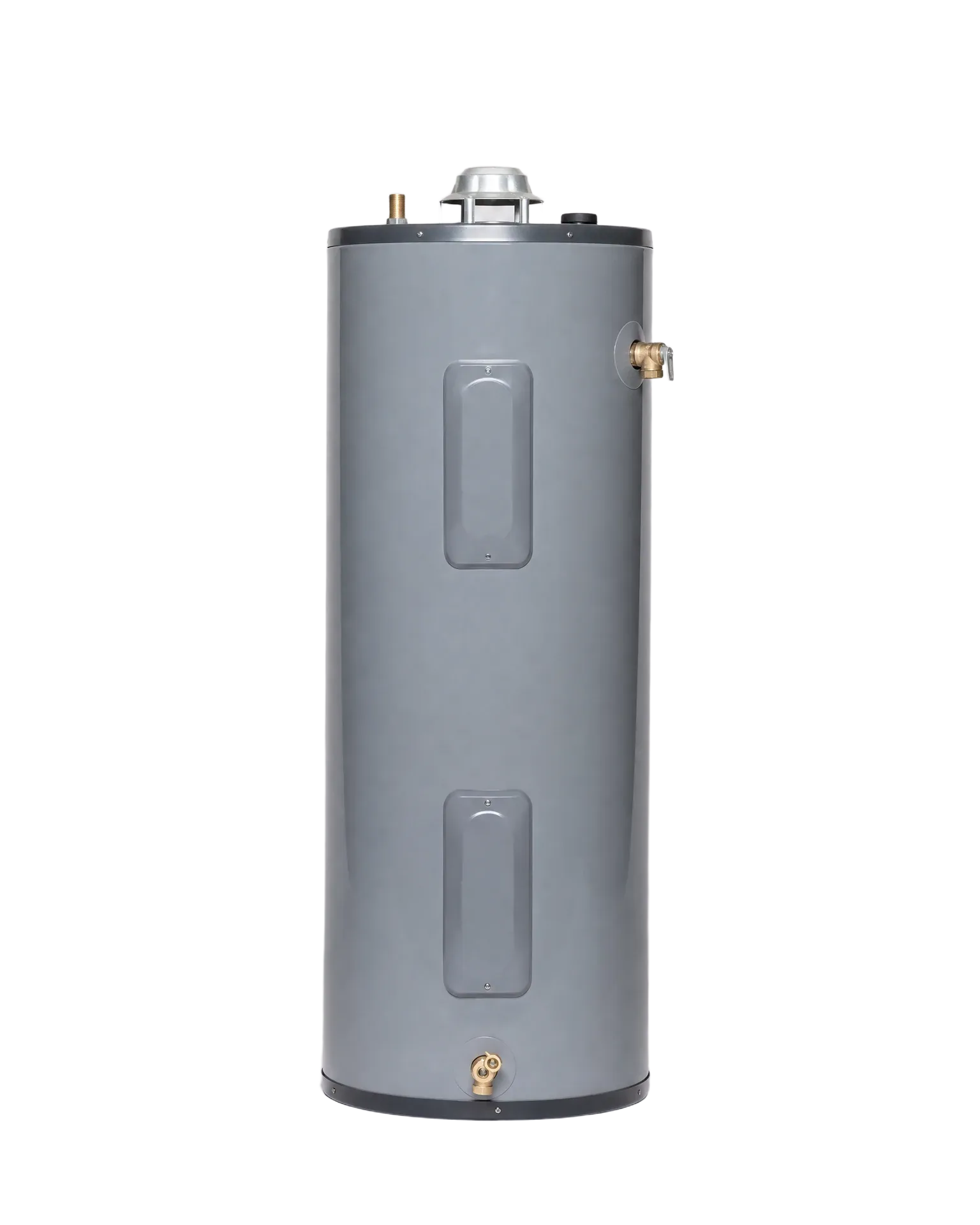
Gas, already piped to your house
Most Nevada homes run gas to the water heater already. Keeping gas means the installation swaps one unit for another instead of running a new line.
Gas is the better fit for most Nevada homes, mainly because gas is already the standard here and a gas water heater recovers hot water faster than an electric one. That matters more than it sounds like it should. A gas tank reheats a full load in under an hour, so a busy household doesn't run cold waiting on the next shower. Electric water heaters do cost less to install, since there's no gas line or venting to deal with, and they tend to last a little longer with less to go wrong. If your home doesn't already have a gas line to the water heater, running one changes the math, and electric may make more sense. If gas is already there, staying with it is usually the simpler and cheaper path. Either way, the right choice depends on what your home already has, not just which fuel runs cheaper on paper.
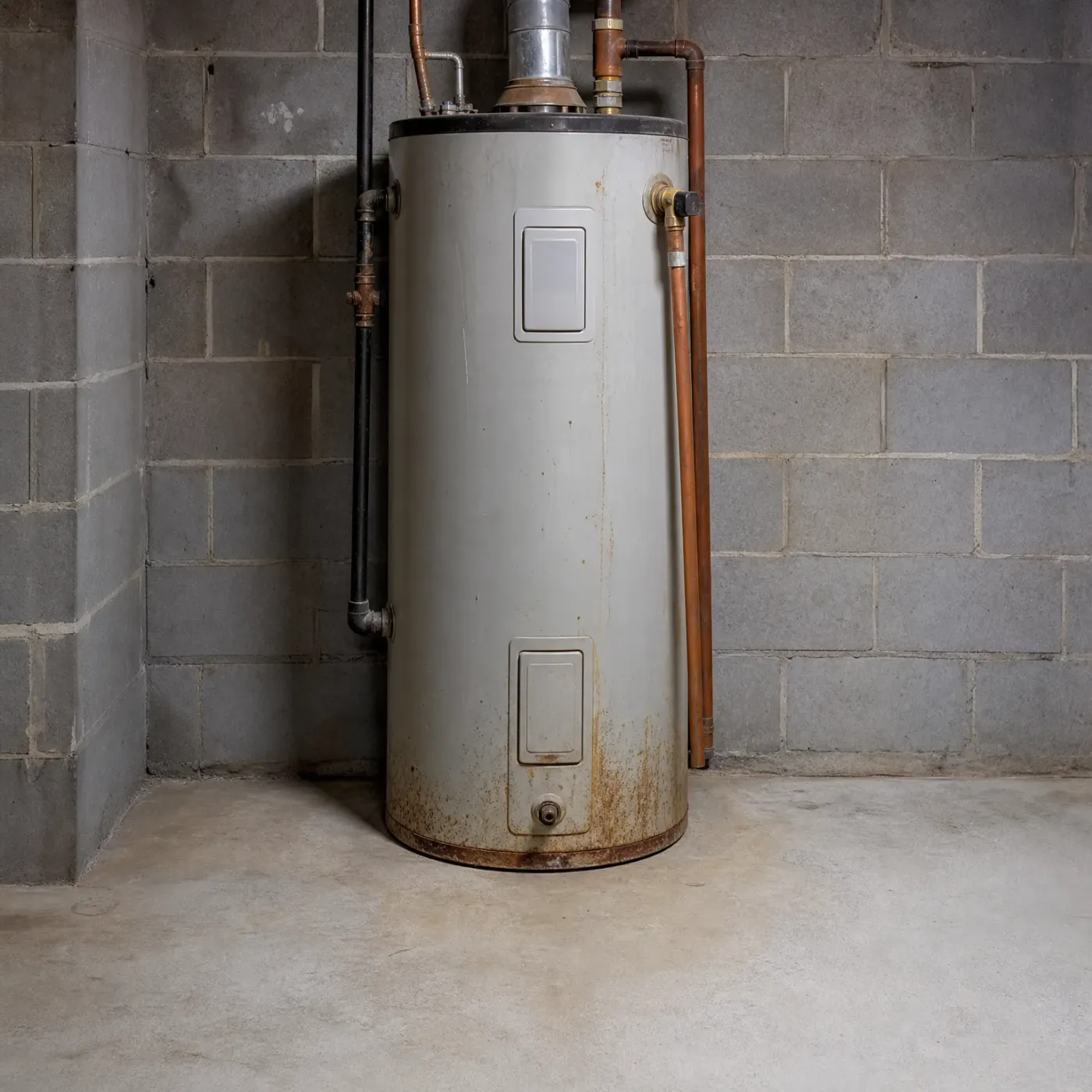
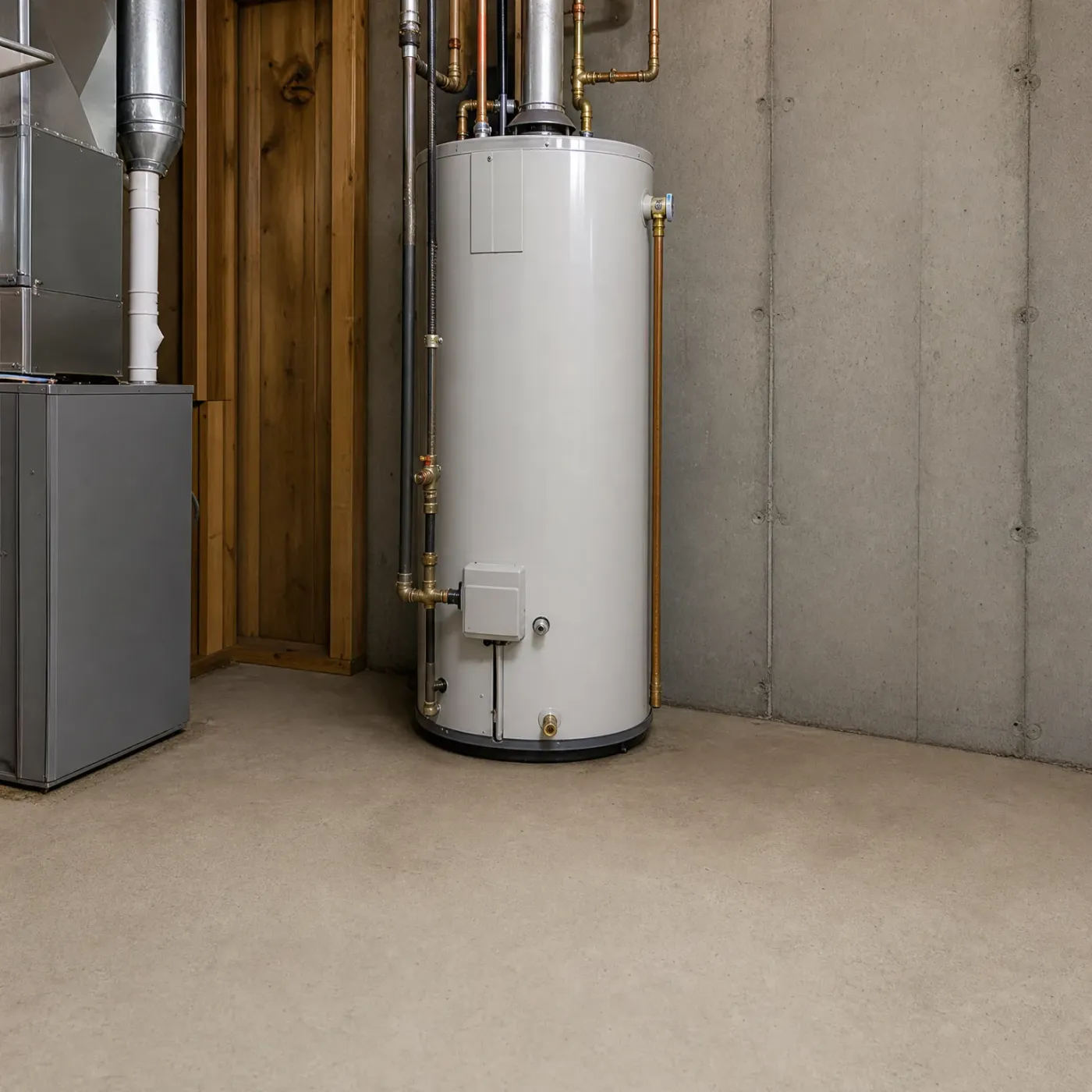
A gas burner heats the whole tank directly, so it can bring a full tank back up to temperature in under an hour. An electric tank relies on one or two heating elements inside the water itself, which takes longer, often two hours or more for the same recovery. In a house with one bathroom running back to back showers, or a family washing dishes while someone showers, that gap shows up as a cold rinse. Gas keeps up with that pace because the burner output is higher than an electric element can match.
Electric water heaters don't need a gas line, so if your home was built without one, or the water heater sits somewhere a gas line doesn't reach, electric is the simpler install. There's no venting to run outside either, since there's no combustion happening. Electric units also tend to lose less heat through the flue, since there's no flue. Where gas has the edge, it's on speed and on fitting a home already wired for gas appliances. Electric still works, it just asks more of the tank to keep up with demand.




Most Nevada homes run gas to the water heater already. Keeping gas means the installation swaps one unit for another instead of running a new line.
No gas line to maintain, but you'll wait longer for a full tank to reheat, which shows up most on laundry day or when the house is busy.
If the water turns cold before everyone in the house has showered, or the dishwasher finishes a cycle with lukewarm water, the tank is telling you something. You might hear it ticking or rumbling as it heats, or notice the water taking longer to get hot at the tap than it used to. A gas tank that's struggling to recover often means a failing burner or a buildup of sediment at the bottom, and if it's left alone, the tank works harder each cycle and the water heater's lifespan shortens. On an electric unit, the same slow recovery usually points to a worn heating element. Either way, the smell of gas near the unit is not something to wait out.
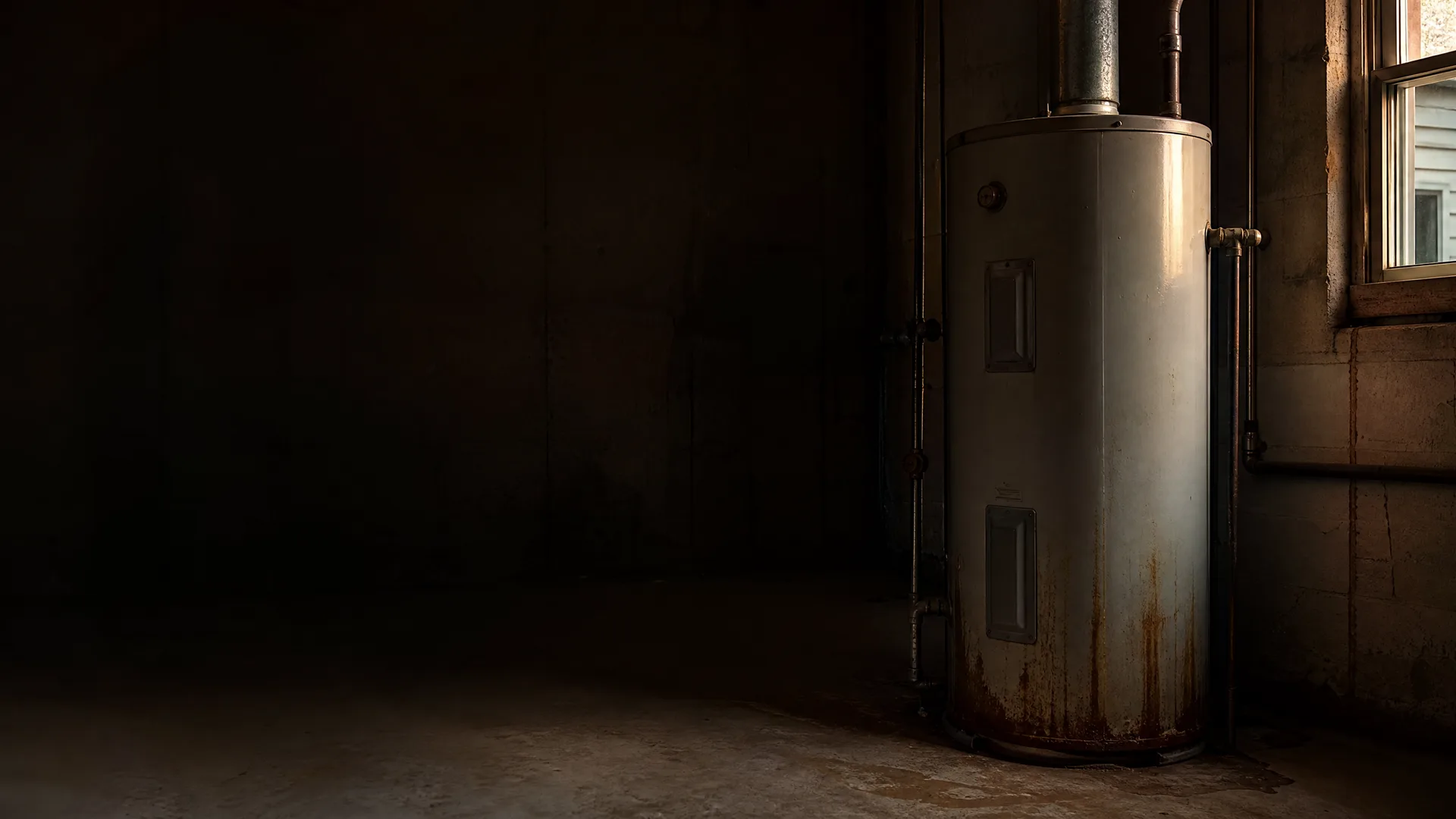
You notice it on your way through the utility room, headed out to close up the patio for the night. The tank sits in the corner, and the rust streaks down its base look darker than you remember, damp at the edges where they meet the concrete. It's late, the heat of the day has finally let go outside, and the house has gone quiet. You crouch down and touch the floor near the base. Wet. Not a puddle yet, just enough to tell you the tank is done deciding and starting to fail. You stand there a second, thinking about who in Nevada you'd even call for this, and whether they'd know a gas tank on sight or ask you a dozen questions first.
Your request stays with one local pro.
Asking costs nothing, and the choice to hire stays yours.
A gas water heater burns fuel under the tank, and that burner sends heat up through a flue that runs through the middle of the tank. The flue is also why a gas installation involves more than running a water and gas line. The vent pipe has to carry exhaust safely outside, and it has to be sized and routed correctly to do that. An electric tank skips all of that. There's no burner and no flue, just two heating elements sitting inside the water itself, one about a third of the way down and one near the bottom. Electric installation means a dedicated circuit and the water lines, nothing to vent.
Both tanks use a thermostat to decide when to heat, but they don't respond the same way. A gas burner fires almost as soon as the thermostat calls for heat. An electric element has to heat up itself before it starts transferring much heat to the water around it, which is part of why gas tanks recover faster, on top of what was already covered.
One part wears the same way in both. The anode rod runs down the center of the tank and corrodes on purpose, drawing the rust-causing reaction away from the steel tank wall. Once the rod is used up, the tank itself starts taking that damage instead. Whether the tank was heated by gas or electricity, the anode rod's condition does more to determine how long it lasts than the energy source does.
Close to six in ten Nevada homes heat with gas, so a gas water heater puts you in the same boat as most of your neighbors. The line's already run to your house. Swapping an old gas tank for a new one is a straightforward trade, not a new setup.
ACS 2020-2024 5-year B25040



Gas is the right call for most homes here, and the reason comes down to recovery. A gas tank reheats fast, which matters when the line to your water heater is already run and swapping the old tank for a new one is a straightforward trade. Electric works too, especially with power as cheap as it is here, but you'll wait longer for a full tank to come back.
Once you've decided which way to go, the next part is finding someone who installs it right. That usually means searching around, calling a few companies, explaining the same problem to each one, then sitting with quotes trying to compare them. This connects you with one licensed Nevada plumber who installs water heaters in homes like yours regularly and knows which brands and setups hold up against the water and heat here.


Skip the search




