Tell us about the job
Takes about a minute. No obligation.
A contractor arriving to repair a water heater in Lincoln County starts with the heating elements and the thermostat, because in an all-electric unit those two components absorb every demand the household puts on the system. Electricity heats more occupied homes in Lincoln County, Nevada than any other fuel, at 58.4% (2020-2024 ACS 5-year). Sediment buildup on an electric element accelerates the kind of resistive failure that a gas burner would shed differently, so the diagnostic path here is specific to the fuel. Scale on the lower element, a failing thermostat, or a tripped reset are the findings that send a repair in one direction or another.
Half the homes in Lincoln County, Nevada were built in 1982 or earlier (2020-2024 ACS 5-year). A water heater sitting in a house that old has had time to accumulate sediment layers thick enough to insulate the burner from the water above it, and anode rods in systems that have gone uninspected for extended stretches are often consumed past the point of doing their job. What a contractor finds when they open the system and check those components decides whether the repair is a flush and a part swap or something that runs deeper into the tank lining itself.
The Parts of a Water Heater a Contractor Checks First
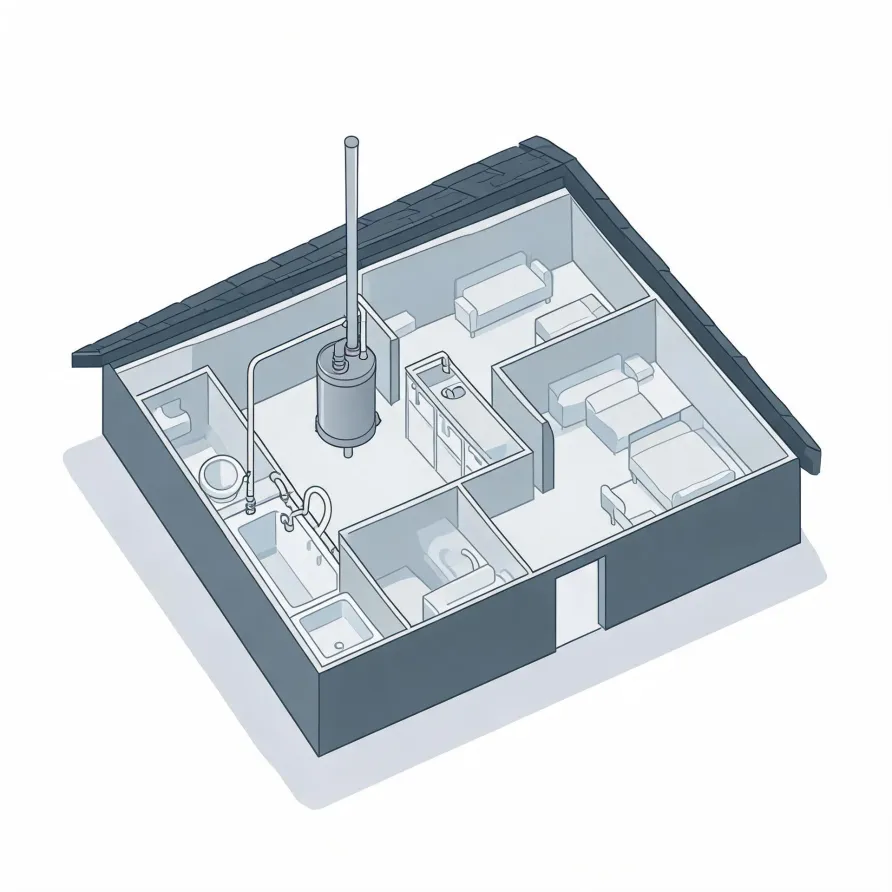
The tank is the piece most homeowners recognize, a large insulated vessel that sits in a utility room, garage, or basement and holds water at a set temperature. The burner assembly or heating element sits at the base or inside the tank and is the first place a contractor looks when hot water stops arriving or arrives inconsistently. The thermostat, mounted on the tank's exterior, controls that temperature and is a common source of erratic output.
The pressure relief valve sits on the side of the tank and opens automatically if pressure inside climbs too high. The anode rod runs down through the tank's interior and slows corrosion of the tank walls. The inlet and outlet pipes at the top of the tank carry cold water in and hot water out to the rest of the house.
The drawing shows a typical layout, and a licensed contractor will determine which parts apply to the specific unit and installation in your home.
Get matched in Lincoln CountyLincoln County, Nevada, by the numbers
39 severe weather events were recorded in Lincoln County, Nevada between 2015 and 2024.
NOAA National Centers for Environmental Information, Storm Events Database, bulk CSV export, events 2015-01-01 through 2024-12-31.Half the homes in Lincoln County, Nevada were built in 1982 or earlier (2020-2024 ACS 5-year).
U.S. Census Bureau, 2020-2024 American Community Survey 5-Year EstimatesLincoln County, Nevada holds 2,471 housing units (2020-2024 ACS 5-year).
U.S. Census Bureau, 2020-2024 American Community Survey 5-Year EstimatesOwners occupy 75.0% of the occupied homes in Lincoln County, Nevada (2020-2024 ACS 5-year).
U.S. Census Bureau, 2020-2024 American Community Survey 5-Year EstimatesCodes & Standards Governing Water Heater Repair in Lincoln County, Nevada1 sourced rules and standards
Licensing Rules for HVAC Repair in Lincoln County, Nevada
In Nevada refrigeration and air-conditioning work is specialty contracting, and a general building contractor may not perform it without holding the licence for that specialty.
Weather Stress on HVAC Equipment in Lincoln County
Water heaters work against whatever the climate throws at them, and in Lincoln County that workload is shaped by local weather patterns. Stress from temperature swings and storm events shortens equipment life and surfaces repair needs that a contractor here will recognize.
39 severe weather events, 2015–2024. Source: NOAA National Centers for Environmental Information, Storm Events Database.